Summary
A general contractor delivering a large food production facility in Ontario needed a reliable way to manage models, drawings, and coordination across seven trades on a tight eight-month schedule. Revit Hero modelled the IMP (insulated metal panel), electrical, and security scopes, and worked directly with the project's VDC teams inside Autodesk Forma (formerly Autodesk Construction Cloud) to centralize files, federate models, and manage version control and access across the team. The result was a faster, more accurate coordination process and, by Revit Hero's estimate, hundreds of trade hours saved before construction commenced.
Note: The client name, general contractor name, and specific project location are confidential. Only the province, Ontario, Canada, is disclosed.
Project Snapshot
Client type: General contractor, food production sector
Industry: Food production / manufacturing
Location: Ontario, Canada
Project type: Food production facility, including refrigeration areas
Project scale: Approximately 103,463 sq. ft. per floor across 3 stories (approximately 310,389 sq. ft. total)
Project duration: September 2025 to May 2026 (approximately eight months)
Revit Hero services: IMP modelling (walls and refrigeration ceilings), electrical modelling, security modelling, model coordination, federated model management, schedule and quantity coordination
Technology used: Autodesk Forma (Data Management, Design Collaboration, Build modules)
Disciplines involved: Architectural, Mechanical, Structural, Electrical, Refrigeration, IMP, Safety, and Security
The Challenge
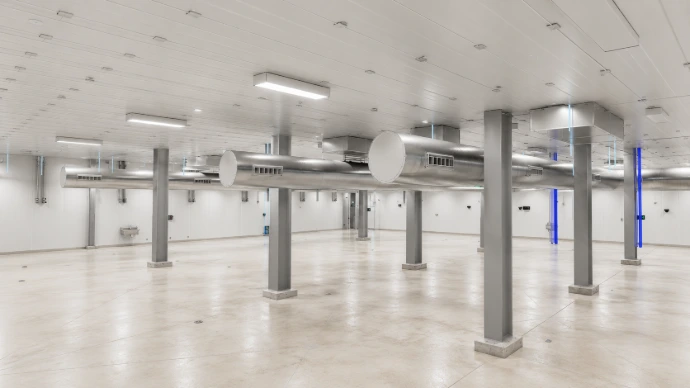
At approximately 310,389 sq. ft. across three stories, the facility represented a significant coordination effort in itself. Food production facilities also carry a specific kind of coordination risk. Refrigeration systems, insulated panel envelopes, electrical infrastructure, and security systems all have to fit together precisely, and there is little room to fix conflicts after fabrication or installation has started. With seven disciplines contributing models and documentation on a compressed eight-month schedule, the project team needed a single, reliable environment to manage specifications, drawings, and Revit models, track clashes across trades, and keep everyone working from the current version of every file.
Without a centralized system, project teams in this position typically face scattered file versions, disconnected communication between trades, and clashes that surface late in construction rather than before. Any of those outcomes could have added cost, delay, or rework to a schedule with little built-in flexibility.
Revit Hero's Approach
Revit Hero joined the project to model the IMP scope (walls and refrigeration ceilings across the plant), along with the electrical and security scopes, and to support coordination across the full model set. Rather than working in isolation, Revit Hero collaborated directly with the project's VDC teams within Autodesk Forma to keep every trade's models moving through a single coordinated environment.
Working across the three Forma modules, the team:
Used Forma Data Management to centralize all project information in one environment, including specifications, PDF and DWG drawings, and Revit models for each trade, with version control and user access restrictions to keep the right information in the right hands.
Used Forma Design Collaboration to federate the architectural, mechanical, structural, refrigeration, IMP, safety, and security models, so the team could identify and track clashes across disciplines before they became field problems, and to keep coordination moving as models were updated and re-versioned throughout the schedule.
Used Forma Build to track issues, document communication between trades, and follow the project schedule, so coordination decisions and outstanding items were visible to the full team rather than living in separate channels.
This approach kept the coordination process centred on a single source of truth for models and documents, which allowed Revit Hero and the VDC teams to resolve conflicts during coordination rather than relying on assumptions or after-the-fact fixes.
Deliverables
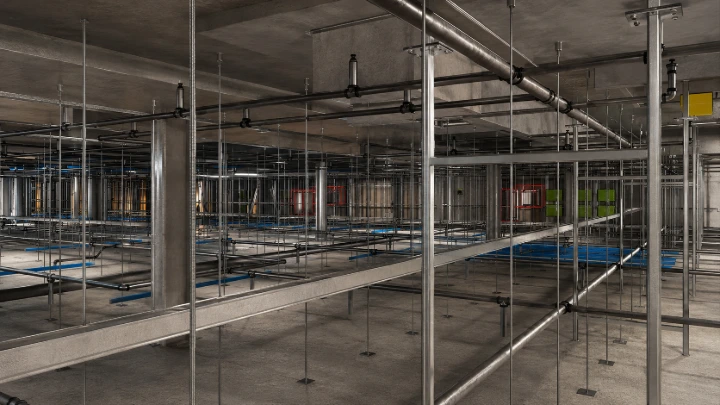
Coordinated IMP models covering wall and refrigeration ceiling systems for the full plant
Coordinated electrical models
Coordinated security models
A federated, clash-tracked model combining architectural, mechanical, structural, refrigeration, IMP, safety, and security disciplines
A centralized Forma project environment for specifications, drawings, and Revit models, with version control and access permissions in place
Ongoing issue tracking and coordination documentation through Forma Build
Results
A clash-tracked, federated model was delivered across all seven disciplines ahead of construction, following the coordination process managed in Forma.
The client directly acknowledged the coordination savings achieved, as well as the speed and accuracy of model creation and coordination.
Project information, versioning, and access were centralized in a single environment for the full team throughout the eight-month schedule.
Reasonable business implication:
A clash-free, well-coordinated model set going into construction reduces the likelihood of field conflicts, rework, and schedule slippage, particularly in a facility where refrigeration, envelope, and infrastructure systems have to align closely.
Why It Matters
Food production and manufacturing projects, and the general contractors and trades that deliver them, often work under tight schedules, with multiple disciplines contributing models and drawings simultaneously. When project information lives in scattered files and email threads, clashes tend to surface during construction, where they are far more expensive and disruptive to fix. A centralized, federated coordination environment gives the project team a shared source of truth, so conflicts are caught and resolved before they reach the field. For a GC managing several trades on a compressed timeline, that shift, from reactive fixes to proactive coordination, can be the difference between a schedule that holds and one that slips.
Revit Hero Advantage
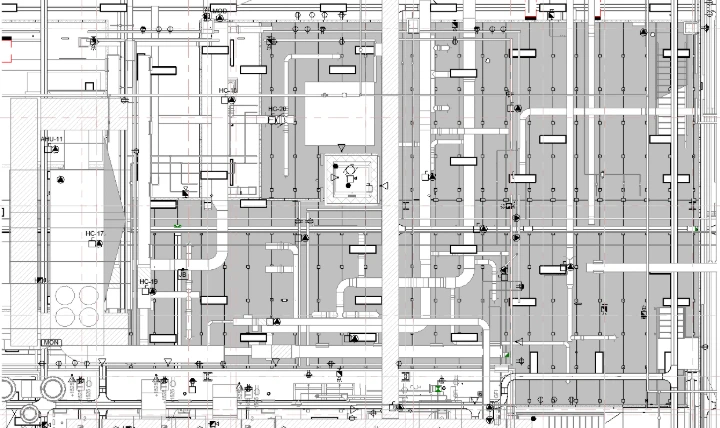
Coordinated modelling across multiple scopes. Revit Hero delivered IMP, electrical, and security models while actively coordinating with the broader project team, rather than working as a disconnected modelling resource.
Direct collaboration with VDC teams. Revit Hero worked within the client's existing Forma environment, alongside the project's VDC teams, to maintain federation and version control throughout the schedule.
Practical use of centralized coordination tools. Revit Hero's approach to Forma's Data Management, Design Collaboration, and Build modules focused on reducing coordination risk and keeping the full trade team aligned, not just producing models.
Is your team facing similar challenges?
Book a live demo with Revit Hero to walk through Autodesk Forma's coordination, data management, and issue tracking capabilities, and see how a centralized environment could work for your next project.